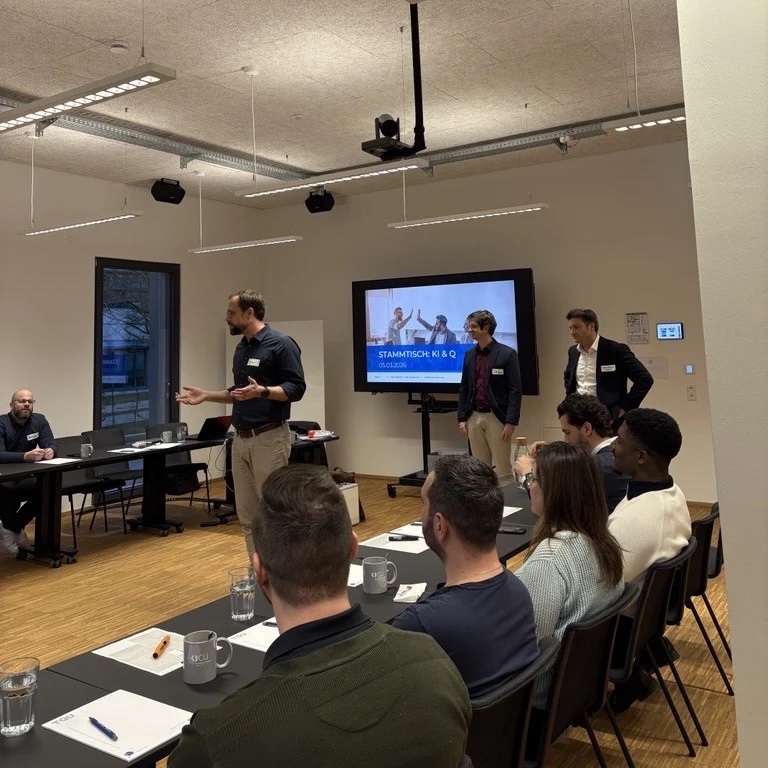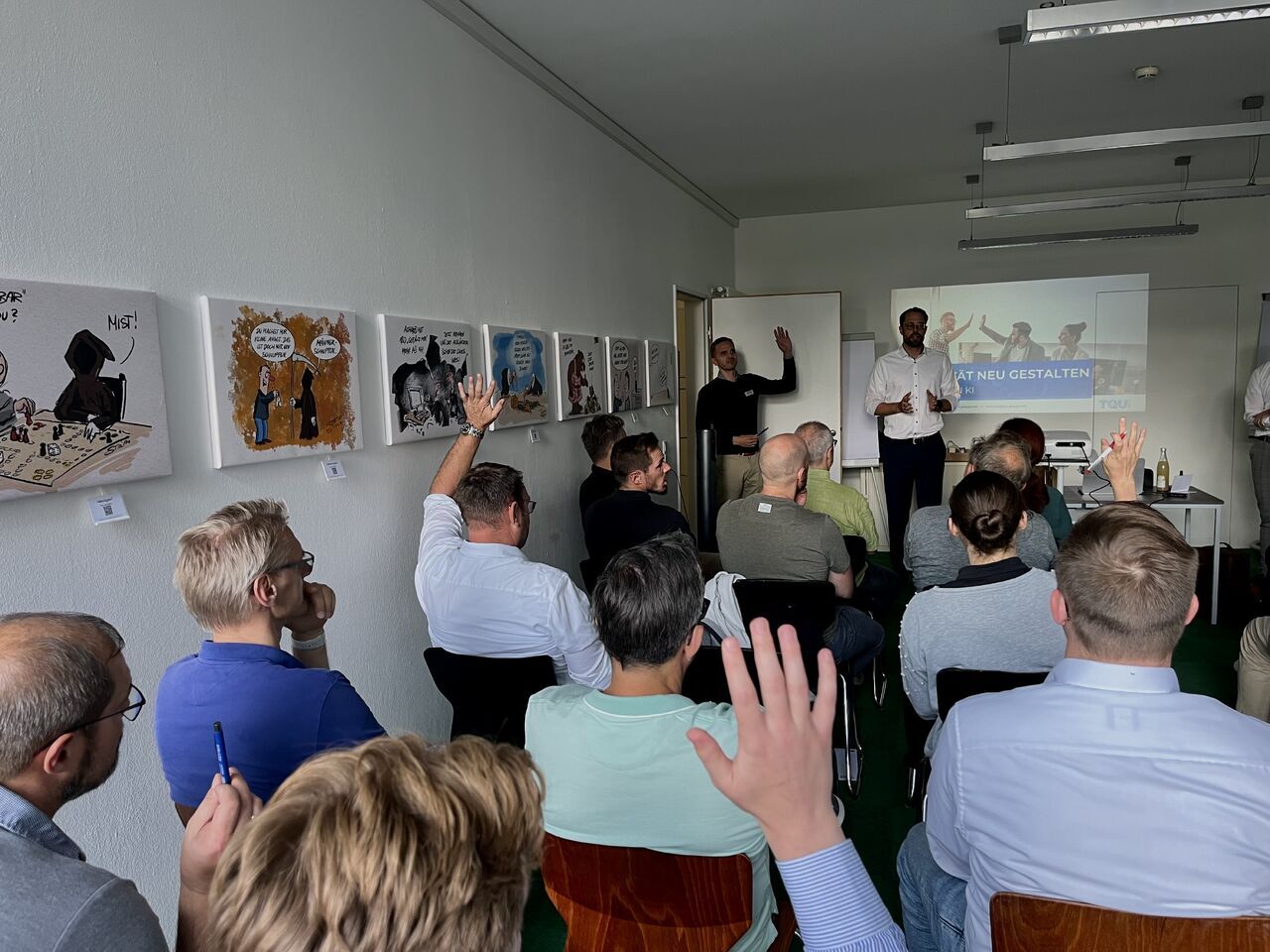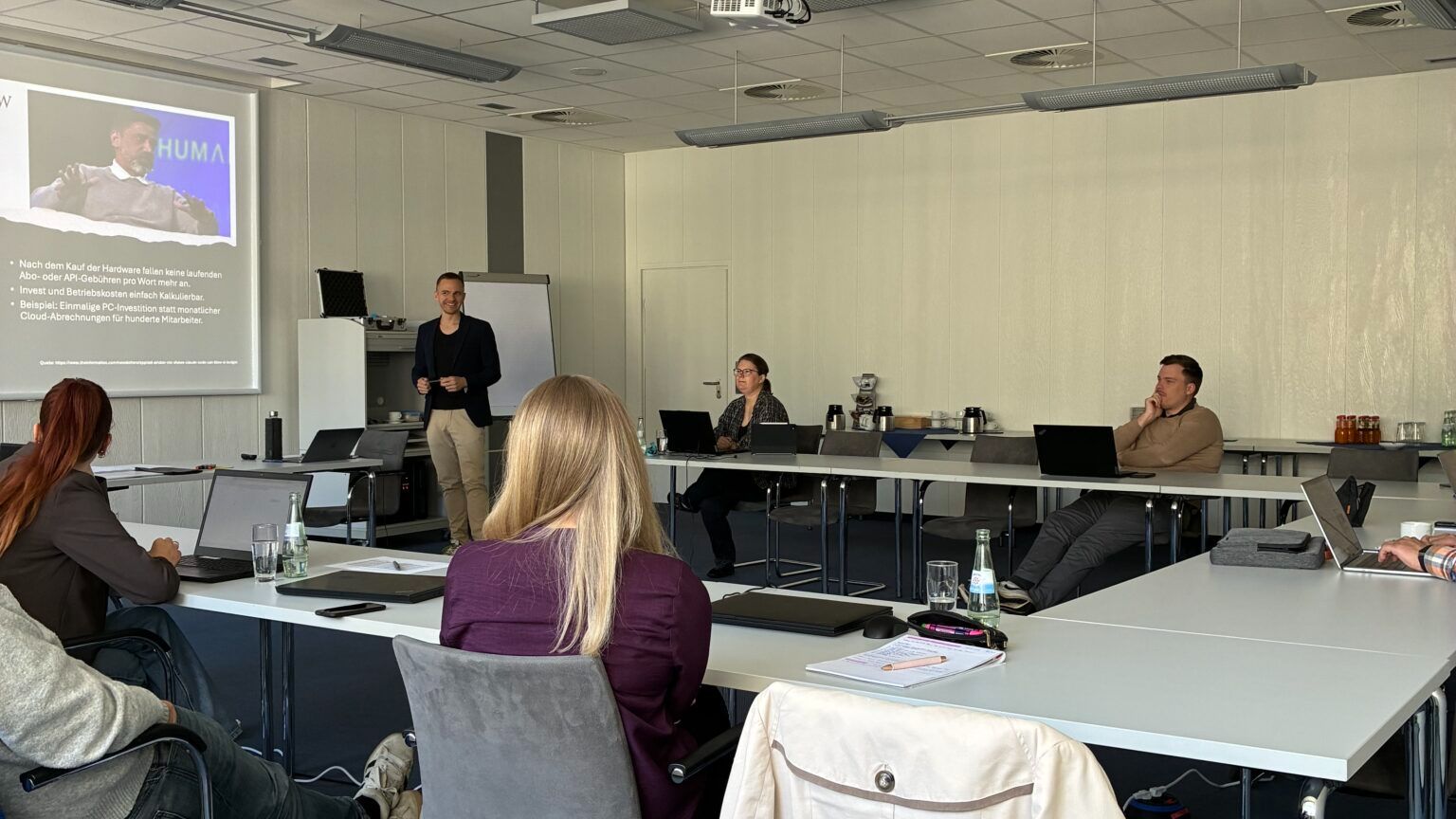
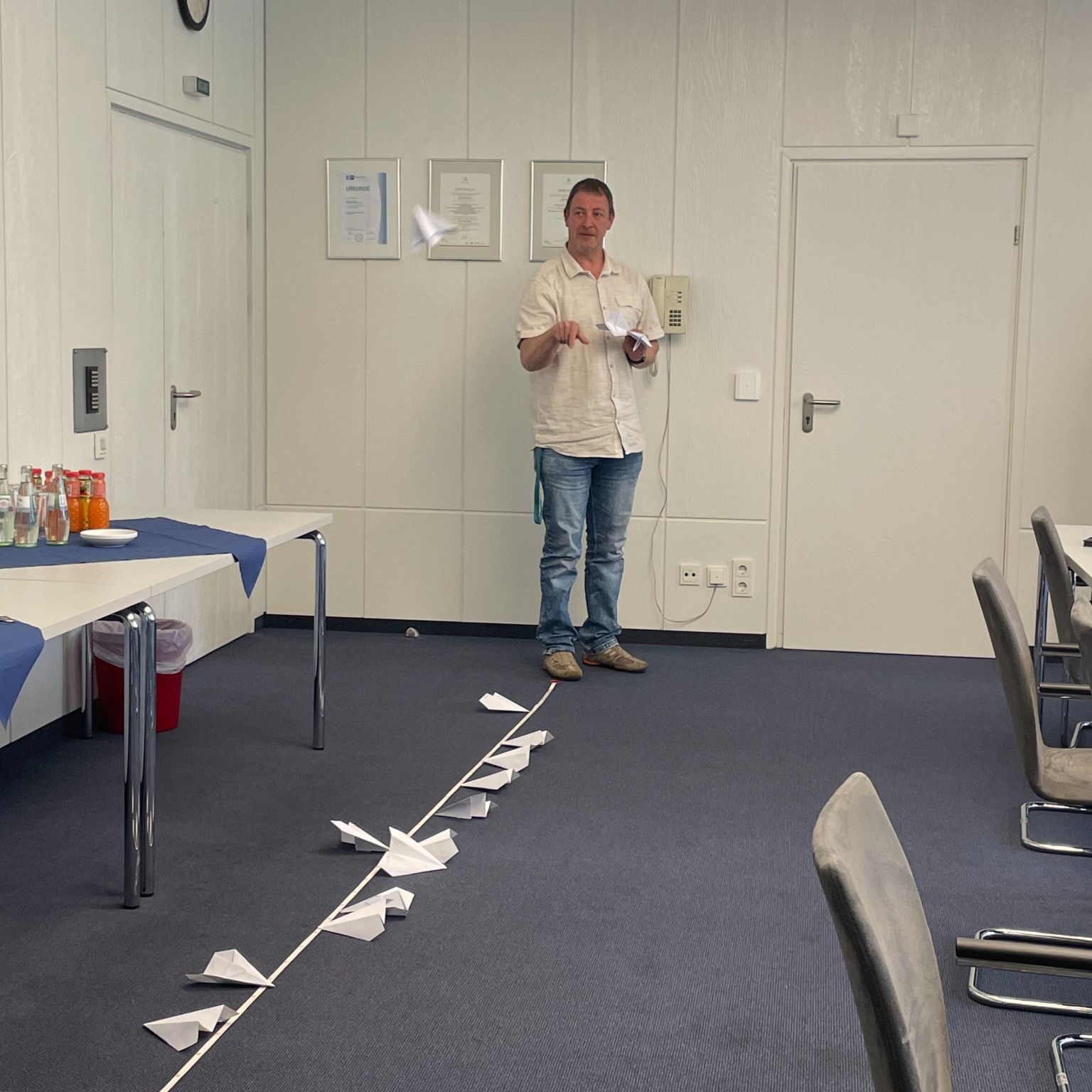
Paper in, production process, plane out — that's all it takes to build a mini production line in a workshop room. And almost instantly, the same problems show up that cost real factories money: quality variance, bottlenecks, rework, complaints. That exercise was the starting point for a hands-on workshop on AI in production and operations — and the lessons from it carry over directly to any real production line.
A miniature production problem everyone recognises
The moment several people work on a simple product one after another, you get variation in execution, waiting time at individual stations, and scrap that needs rework. With paper airplanes, that's visible within minutes — on a real production line, the same patterns often take weeks to surface, scattered across hundreds of individual cases. The difference: with paper airplanes, you see the problem immediately. In real complaint data, you first have to go looking for it.
Where AI in production actually helps
The exercise maps to four very practical levers:
- Easing the skills shortage: knowledge and standards that otherwise live only in a few experienced colleagues' heads become quickly available — including for new team members.
- Making complaints manageable: structuring, prioritising, and spotting root causes instead of symptoms.
- Patterns over gut feeling: statistical anomalies on the line become visible before they turn into a guessing-game discussion.
- Turning standards into action: fixing defects and deriving effective measures — not just documenting them.
Why local and offline is often the right answer
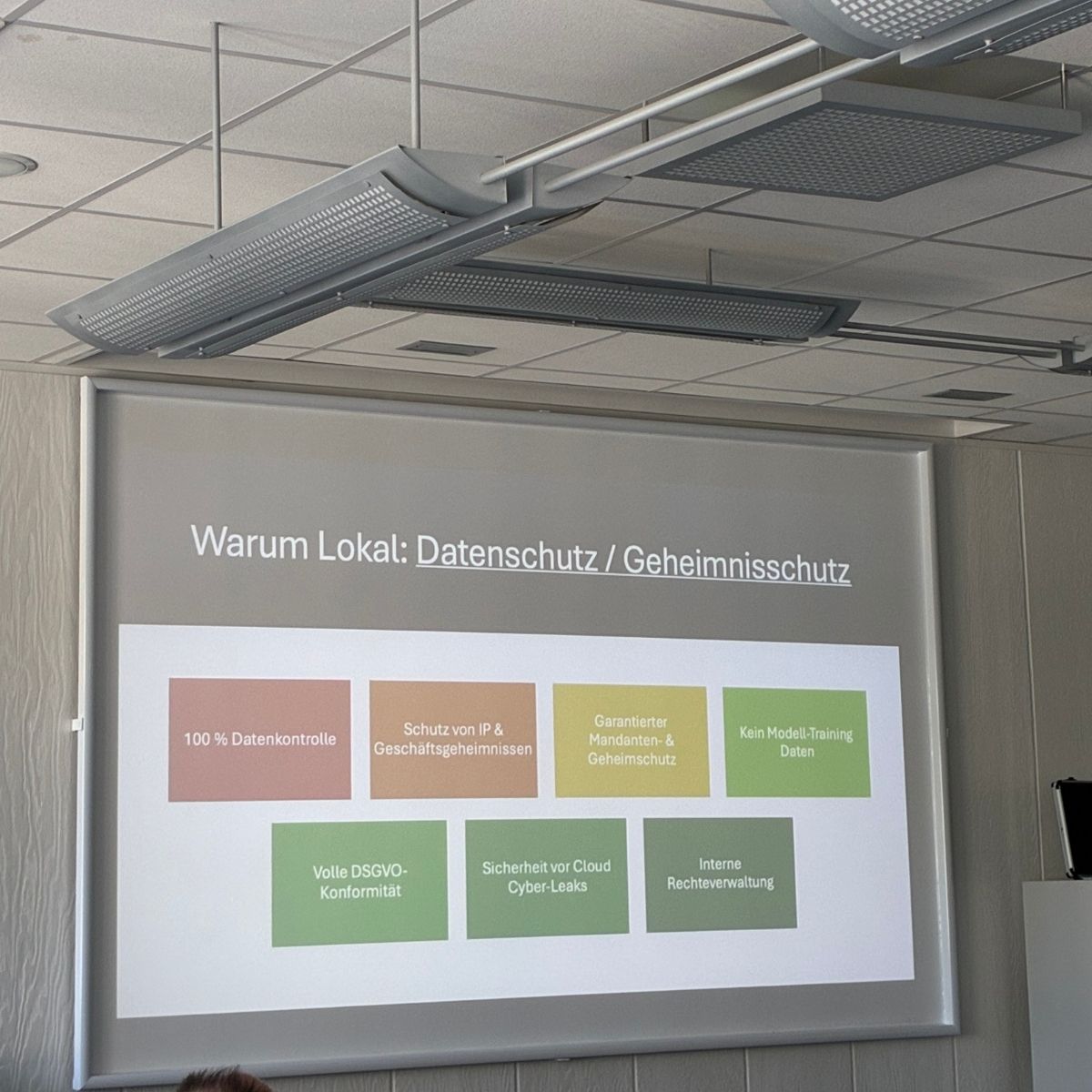
The first question from industry is almost always the same: what about data protection and confidentiality? The good news: local, offline AI answers that directly — full data control, no training on external servers, GDPR-compliant. And usually cheaper to run, too: instead of monthly cloud bills for hundreds of employees, you start with a one-time investment whose costs are clear from day one. That same principle — keeping data sovereignty in-house instead of depending on the cloud — is exactly why KIundQ's tools run wherever your data already lives.
What this means for your team
What ties these four levers together is the same principle behind our work at KIundQ: AI should make your team stronger, not replace it. It supplies structure, patterns, and suggestions — the technical decision stays with the people who know your production best.
Thanks to INN-tegrativ gGmbH for hosting, and to every participant for the tough questions. More impressions in the LinkedIn post on the seminar.
See how "making complaints manageable" shows up in a concrete tool: Complaint Management.